

%20(1).png)
Heading Into Silking: Is Your Nitrogen on Track?

Corn planted in late April and early May this year in the US Midwest will soon be entering its reproductive phase through shooting tassels and silks. After having built out its massive solar collection system of multiple leaves, corn now shifts its development focus on putting its energy into ear and grain development, even to the point of cannibalizing itself if necessary.
Let’s examine how the corn has used its nitrogen uptake so far, and what it will likely do in the next few weeks.
Mid- to Late-Vegetative Growth
Since V6, a few weeks ago, corn has been on a growth spurt, developing leaves quickly. Earlier in its development it took 100-120 growing degree day units for each collared leaf or growth stage to appear. As the 10th, 12th or 14th collared leaves appeared, the number of heat units per leaf decreases to around 70 to 80 growing degree days. More leaves appear faster than before.
To support this rapid development, large amounts of nitrogen are extracted from the soil, usually in the nitrate (NO3-N) form. This drive chlorophyl development, which in turn drives solar energy conversion to biomass. As much as 7 pounds per acre per day of nitrogen is assimilated into the developing corn plant between V6 and VT. Timing and placement of nitrogen to be available during this time is essential.
During this time the plant is preparing itself for reproduction mode. Around V10 to V12 corn will initialize the development of the harvestable ear. Likewise, energy gathered during this time is going towards this ear development.
Switching to Reproductive Mode
As the corn reaches the end of its vegetative phase by placing the final leaves, a tassel will develop to shed pollen for the forthcoming ear with silk. Nitrogen uptake slows greatly during this time, with nutrients being shifted within the plant to developing the embryos that hopefully become kernels. As we know, this is a crucial stage in the growth of the corn plant; it has built its solar collection system with 16 to 19 leaves, created a pipeline of nutrient flow through roots and stalk, and set up the next generation of embryos. However, excessive stress during this time, often from too much heat or lack of water, can sabotage the entire effort heretofore.
Once the ear is successfully fertilized and moves into R2 or Blister stage, nitrogen uptake from the soil resumes, although not at the same level as before in the mid- to late- vegetative stages. In many soils with sufficient organic matter, a good amount of the nitrogen taken from the soil comes from mineralization. However, as the crop matures and all effort is put into generating grain, nitrogen will be remobilized from other parts of the plant, starting with lower leaves and working its way up the plant.
What To Do for Nitrogen During Silking?
If you’ve provided sufficient nitrogen to your corn crop so far, congratulations – you've done the best you can. Additional nitrogen from liquid drops or aerial application of nitrogen likely won’t be beneficial if sufficient N has been provided so far. During R1 to R2 the uptake slows to a trickle, allowing the soil to catch its breath, so to speak, and continue to mineralize sufficient N for future crop needs.
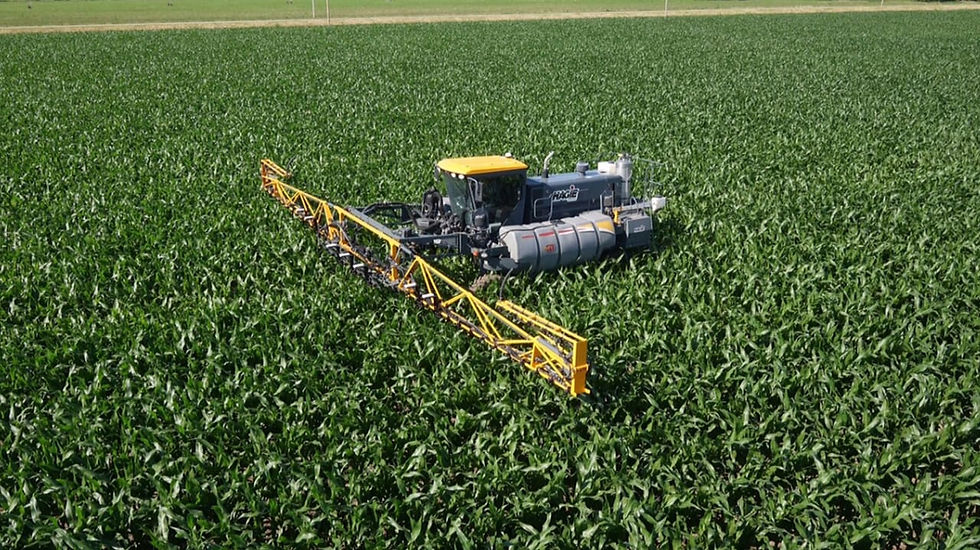
However, if things didn’t go as planned, nitrogen was starting to run short going into reproduction, or you have soils with low nitrogen holding or mineralization capacity (think Valentine loamy sands), extra applications of nitrogen are often necessary. Because the crop is actively pulling nitrogen and other nutrients into finishing its ears, nitrogen deficiency will become apparent but often can be readily reduced if applications are made in a timely manner.
Having eyes in the sky through remote sensing and the ability to manage nitrogen through irrigation or high clearance applications are cheat codes to ensure your corn doesn’t run short of nitrogen, either early on in vegetative mode or during crucial reproduction. Knowing what nitrogen your crop needs and when is important, but just as important is the ability to execute when things may run short.


Comments